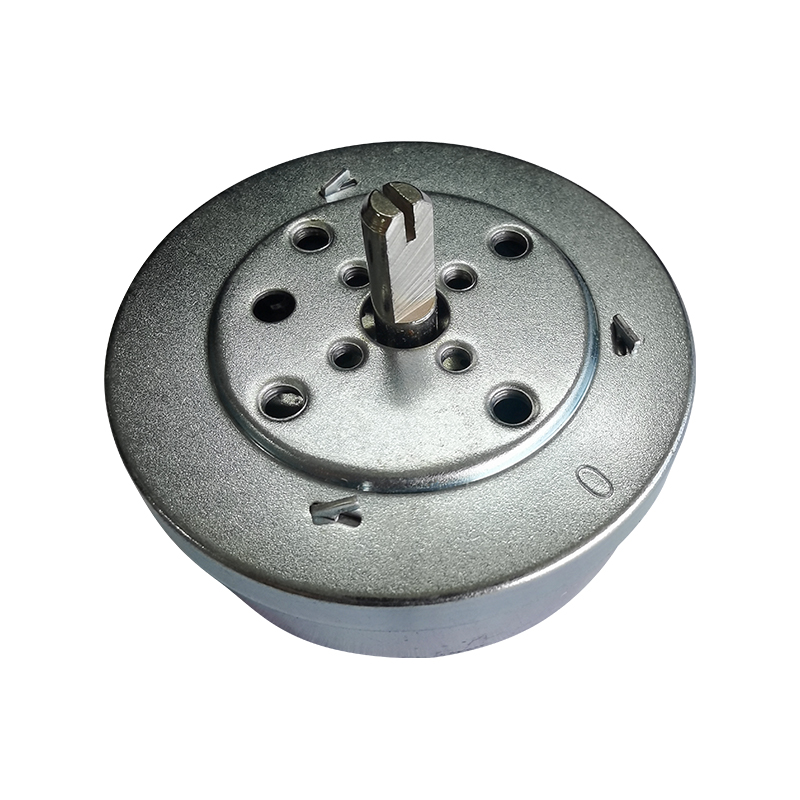
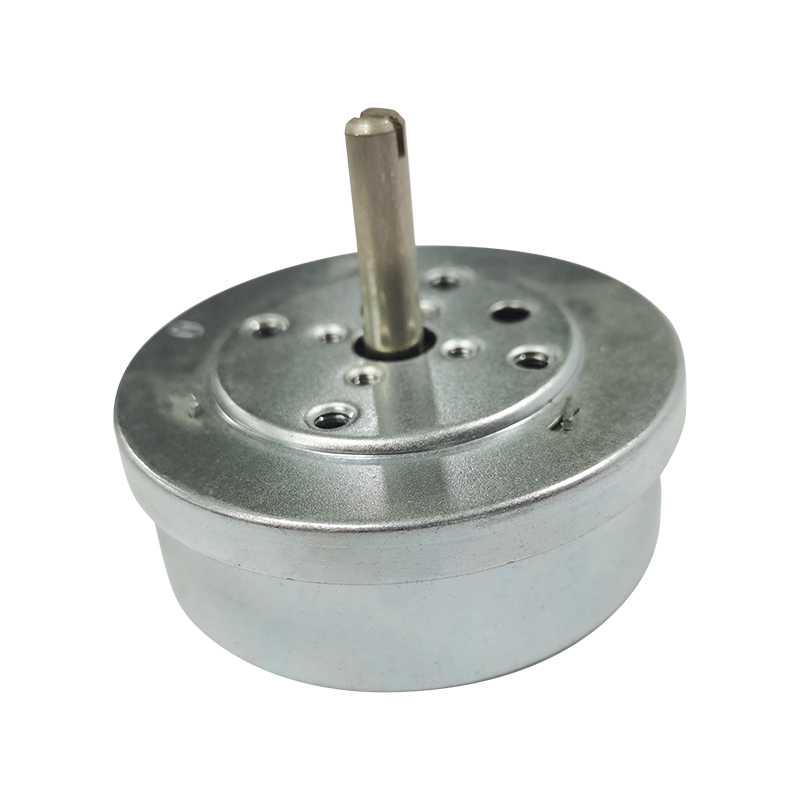
A production line is due to ship a container of air fryers on Friday, and the timers on that run are sticking at the ten-minute mark instead of returning to zero. The component costs a fraction of a dollar, but the delay costs a week and a customer review. That gap between unit price and real cost is precisely why outlet timer specification deserves more engineering attention than it usually receives in B2B purchasing.
The short answer is straightforward: in cooking appliances, a mechanical outlet timer is normally chosen because it keeps time without power, tolerates heat and humidity near the cooking cavity, and holds a cost structure that survives multi-million-unit programmes. The rest of this guide translates that conclusion into specifications, supplier questions, certification checks, and field-return prevention.
What an Outlet Timer Means to an Appliance Buyer
In retail catalogues, an outlet timer is a self-contained plug-in device: a dial that sits between a wall socket and a lamp, fan, aquarium pump, or space heater, and switches the load off after a set interval. In appliance manufacturing, the same phrase is used more broadly for any timer that opens or closes a load after a defined period, including the panel-mounted mechanical unit pressed into the front of an oven, air fryer, electric steamer, or sterilizer.
The two markets overlap more than they appear to. A plug-in countdown outlet timer is usually built around a small spring-driven movement, a cam, and a set of contacts, which is the same architecture used inside appliance panels. Whether the buyer is a brand owner developing a new countertop appliance or a wholesaler assembling a retail range, the sourcing questions converge on range, repeatability, contact rating, heat tolerance, and certification.
Three product forms worth separating early
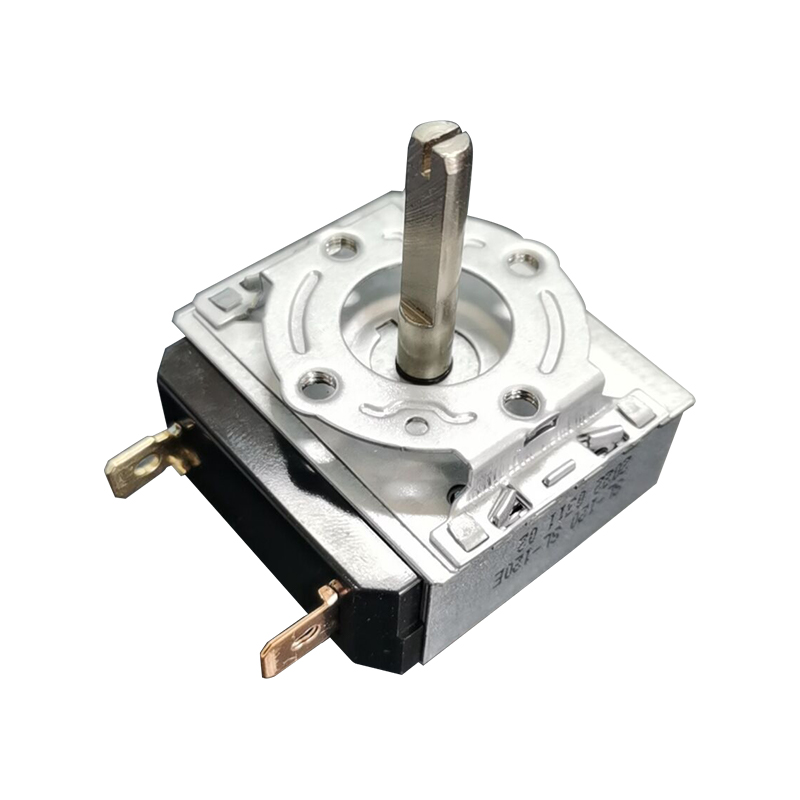
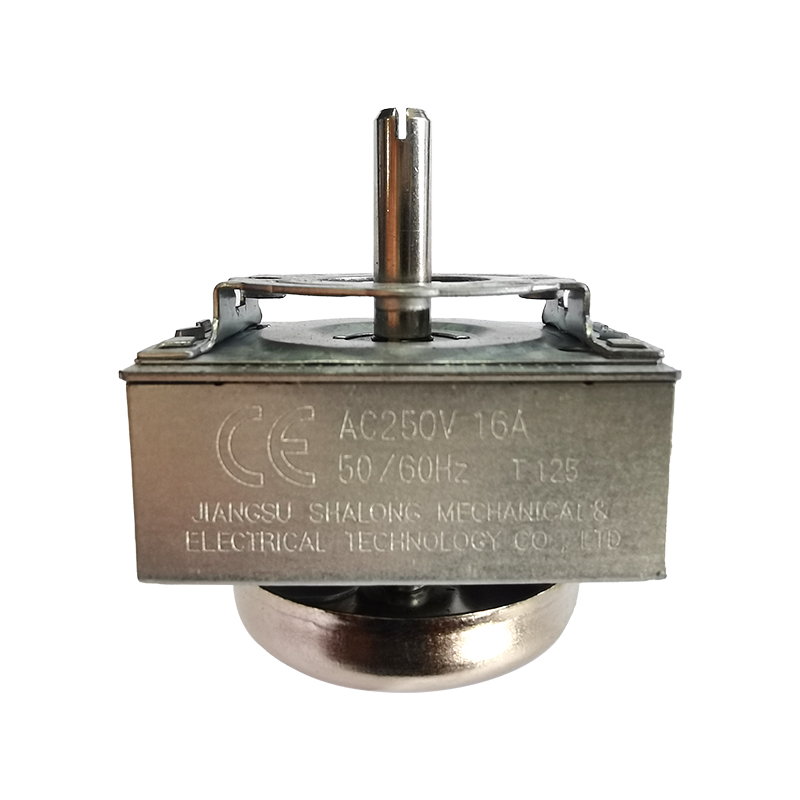
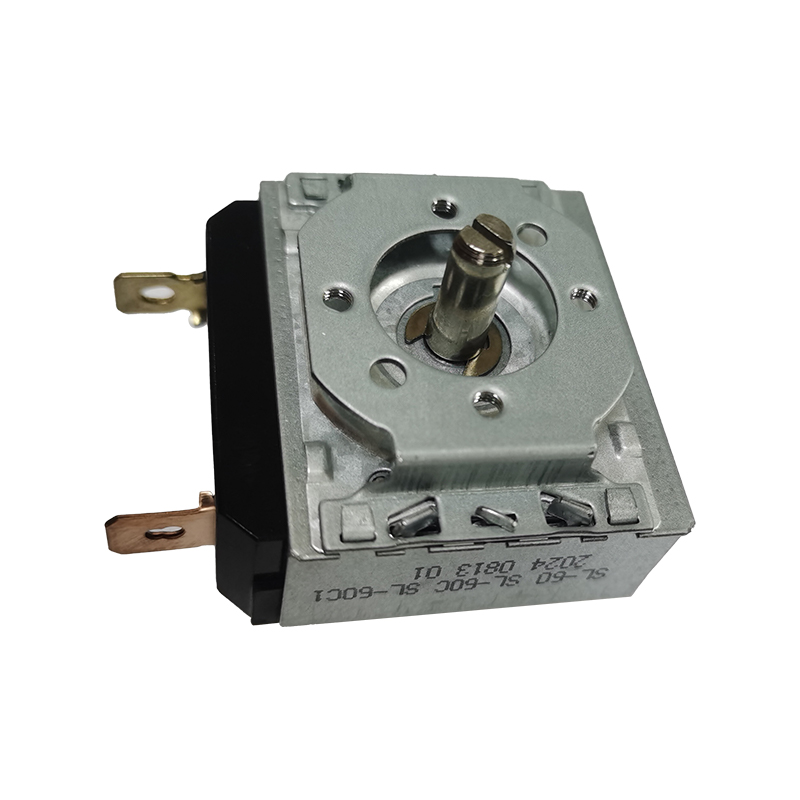
- Panel-mounted mechanical countdown timer: the movement sits behind the appliance fascia, the shaft passes through the panel, and the user turns an external knob. Timing is set by hand and the unit returns to the off position on its own.
- Plug-in countdown outlet timer: the same class of movement inside its own enclosure, with a plug and socket on the housing. Sold through retail and wholesale channels rather than into an assembly line.
- Digital or programmable outlet timer: an electronic unit with scheduling, repeat cycles, or app control. Different component base, different failure modes, and a different certification path.
Most of this guide addresses the first two, because they share a mechanical platform and because that platform is where supplier selection has the largest measurable effect on field returns.
An outlet timer is only as reliable as its movement; the housing, knob, and packaging are the parts a buyer can change easily, while the gear train and contact set decide whether the appliance comes back.
Mechanical or Electronic: The Trade-Off Behind an Outlet Timer Decision
The useful question is not which technology is superior in general, but which failure mode the programme can tolerate and which cost structure the retail price can carry. In small cooking appliances, mechanical timers hold an advantage in heat proximity, standby behaviour, and part count, while electronic timers hold an advantage in resolution, multi-stage programmes, and display-driven interfaces.
Table 1. Mechanical and electronic outlet timer approaches compared on the criteria that most often decide a small-appliance programme.
| Consideration |
Mechanical outlet timer |
Electronic outlet timer |
| Timing source |
Mainspring, gear train, and escapement |
Oscillator, microcontroller, and switching relay or triac |
| Power behaviour |
No standby draw and no battery needed to keep time |
Requires a supply and usually a battery or supercapacitor for clock retention |
| Behaviour near heat |
Metal and high-temperature polymer parts can be placed close to the cavity |
Semiconductors need derating, distance, and thermal shielding |
| Repeatability |
Depends on gear geometry, spring torque, and contact timing; stable but finite |
High resolution and easy calibration; depends on oscillator quality |
| User interface |
Rotate to set, detents for feedback, audible bell at zero |
Buttons or touch panel, digital display, silent or buzzer end signal |
| Dominant failure mode |
Jam, contact wear, weakened spring, dust ingress |
Supply failure, relay sticking, firmware or memory fault |
| Field service |
Replaced as a unit, no diagnostics required |
Board-level diagnosis or whole-board replacement |
| Volume cost structure |
Low part count; cost driven by tooling and assembly automation |
Cost driven by components, firmware, and EMC testing |
| Certification focus |
Materials, thermal performance, mechanical endurance, safety |
EMC, safety, and software-related requirements |
| Best fit |
High-heat, low-cost, interruption-tolerant appliances |
Appliances needing programmable schedules or multi-stage cycles |
Read the table as a risk map rather than a scorecard. A programme that ships into markets with unstable mains supply usually favours the mechanical column, because an appliance that loses its clock does not lose its cooking function. A programme that sells on presets, delayed start, or app connectivity will accept the electronic column and pay for the extra validation.
There is also a mixed path worth noting: several appliance designs use a mechanical timer for the user-facing countdown and keep electronics for temperature control. In that configuration the mechanical unit carries the safety-relevant switching, which raises the importance of contact rating and reset behaviour rather than timing resolution.
Choose the outlet timer architecture by the failure mode you can afford: mechanical units fail visibly and cheaply, electronic units fail invisibly and expensively.
Inside a Mechanical Outlet Timer: Structure and Working Principle
The mechanical outlet timer is a compact energy storage and release device. Understanding its four functional blocks makes specification conversations with a supplier far more productive, because each block maps to a different set of drawings, tolerances, and test methods.
The spring motor and gear train
A mainspring stores the energy that the user introduces when turning the knob. A reduction gear train converts fast, low-torque rotation into slow, higher-torque rotation at the cam shaft. Ratchet and pawl elements separate the winding motion from the timing motion, which is what allows a single knob to both set and start the countdown. Gear geometry, module size, and material hardness decide how the timer behaves after thousands of cycles, and this is where in-house tooling capability matters, since small-module hobbing and progressive die work define tooth quality more than assembly labour does.
Self-stepping escapement
The escapement converts continuous spring torque into discrete steps, producing the familiar tick and holding the cam shaft at a steady rate even as spring torque declines. That last point is the operational heart of the design: without a controlled release, the timer would run fast when fully wound and slow near the end of its range. Buyers who want a deeper technical explanation of this mechanism can read the site's article on the self-stepping function in metal mechanical timers, which describes how step geometry interacts with timing consistency.
Cam, contacts, and bell
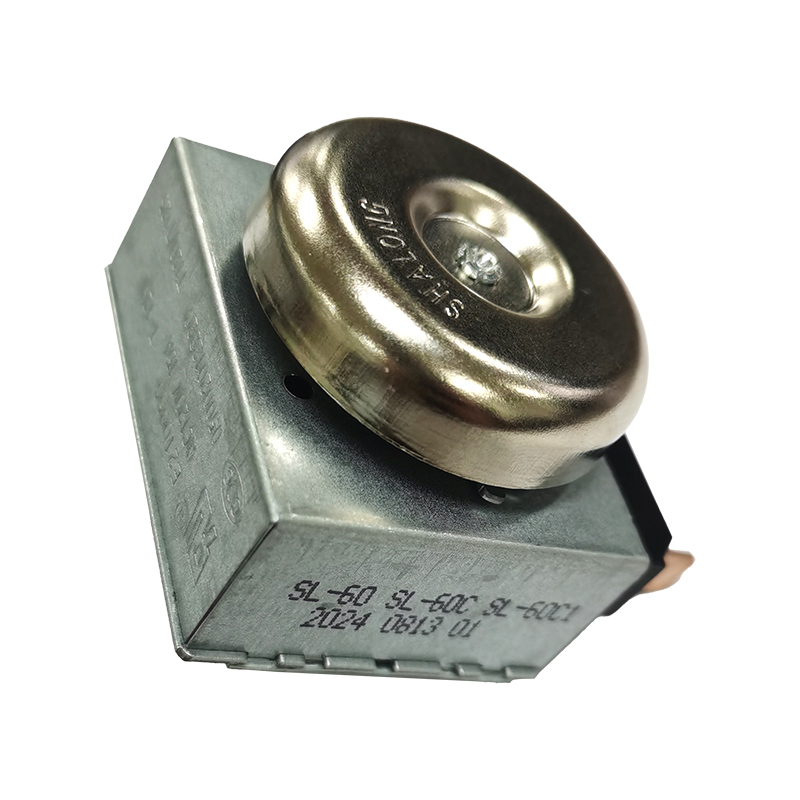
The cam profile determines the exact angular position at which the contact set opens or closes. Contact material and spring pressure then decide whether that switch survives an inductive or resistive load without pitting. On bell versions, a separate hammer and gong are driven from the same shaft, so the ring duration is a function of shaft speed at the end of the range rather than a separate mechanism.
Why the architecture suits appliance integration
There is no battery to leak, no firmware to recover, and no standby consumption to report in energy labelling. The detent feel tells the user that the dial has engaged, and the mechanical zero position gives an unambiguous off state that a service technician can verify by hand in seconds. Those are commercial advantages as much as engineering ones.
Timing consistency in a mechanical outlet timer comes from the escapement and gear train, so those are the drawings to review first and the assemblies to inspect during a factory audit.
Timing Ranges an Outlet Timer Has to Cover
Range is the first parameter on almost every enquiry sheet, and it is usually driven by the cooking process rather than by user preference. Comparing the ranges that appear across appliance categories shows how widely the requirement spreads, from a fifteen-minute egg cycle to a three-hour steaming session.
The chart below summarises the upper end of the range used in each application category, based on the ranges published across this supplier's mechanical timer catalogue. It is intended as a planning aid for buyers writing a specification, not as a fixed rule for any single appliance.
Egg cooker / egg steamer
15 min
Medical device timer
15 min
Disinfection cabinet
30-60 min
Free-standing oven
60 min
Electric pressure cooker
100-120 min
High-temperature ring timer
160 min
Bars are scaled against a 180-minute maximum, and the value column shows the top of the range used in each category. Two clusters are visible. The short-range cluster, roughly fifteen to sixty minutes, covers air fryers, egg cookers, deep fryers, and disinfection cabinets, where the process is monitored closely and a longer dial would only reduce setting resolution. The long-range cluster, from ninety minutes upward, covers ovens, steamers, and pressure cookers, where the cycle is unattended for most of its duration.
What the chart does not show is that range and resolution compete for the same dial face. Stretching a single knob to cover 180 minutes makes a five-minute setting harder to repeat accurately by hand, which is a common complaint in field feedback. Several programmes solve this by selecting a shorter-range unit for the main cooking function and keeping a separate mechanical or electronic timer for longer auxiliary cycles.
A second observation is that certification marks tend to follow the application rather than the range. Units intended for medical devices and disinfection equipment appear with CE, UL, and DKJ marks in the same catalogue as plain household appliance timers, which suggests that the platform is shared and the compliance work is layered on top. Buyers evaluating a range extension should ask whether the additional mark requires a change in materials or contact construction, or only additional testing.
Match the range to the cooking cycle first, then check that the dial face still allows the shortest setting in the recipe to be repeated accurately by hand.
Selection Points: What to Write Into an Outlet Timer Specification
A specification that only names a range invites samples that pass on the bench and fail in the field. The parameters below are the ones that most often generate a revision request or a returned shipment, and they belong in the RFQ document rather than in a later email exchange.
Range, repeatability, and reset behaviour
State the nominal full-scale range and the repeatability band the programme will accept, expressed as a percentage of full scale rather than in absolute minutes, because the same tolerance becomes harder to hold as the range lengthens. Add the number of consecutive cycles used to verify it, and specify whether the timer must return to a positive off position or may stop anywhere within a small arc. Reset behaviour looks trivial until a customer reports that the appliance stayed on after the dial reached zero.
Temperature class and material choices
Decide where the movement will sit relative to the heat source. A timer mounted behind a fascia on a countertop air fryer sees a very different ambient profile from one mounted on a free-standing oven door panel. Ask for the material set for the housing, cam, and gear train, and confirm which parts are specified as high-temperature resistant rather than standard. This is where a supplier's actual product range, rather than a catalogue claim, becomes useful evidence.
Shaft, mounting boss, and terminals
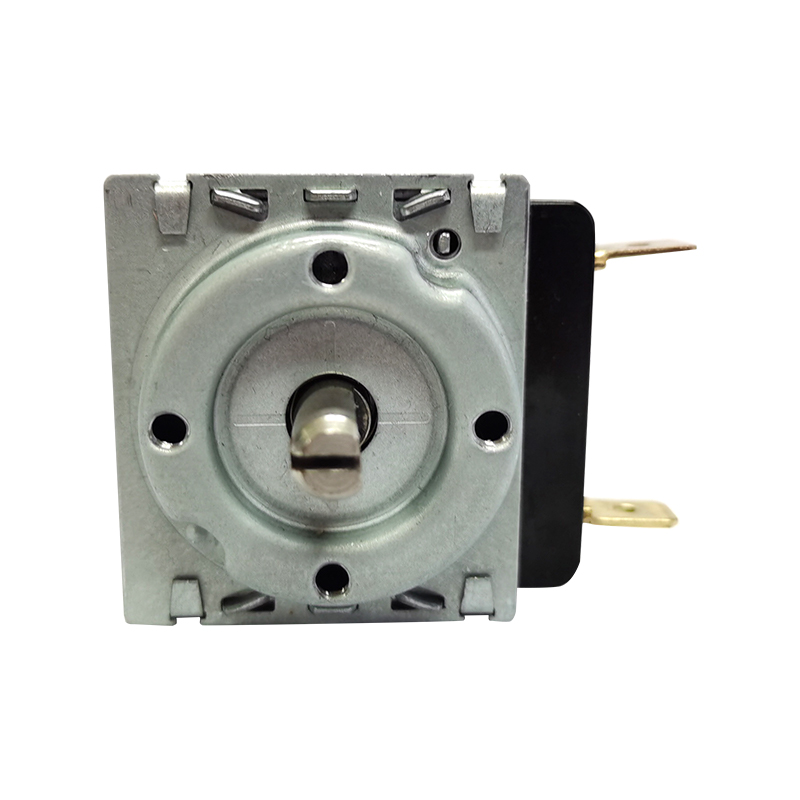
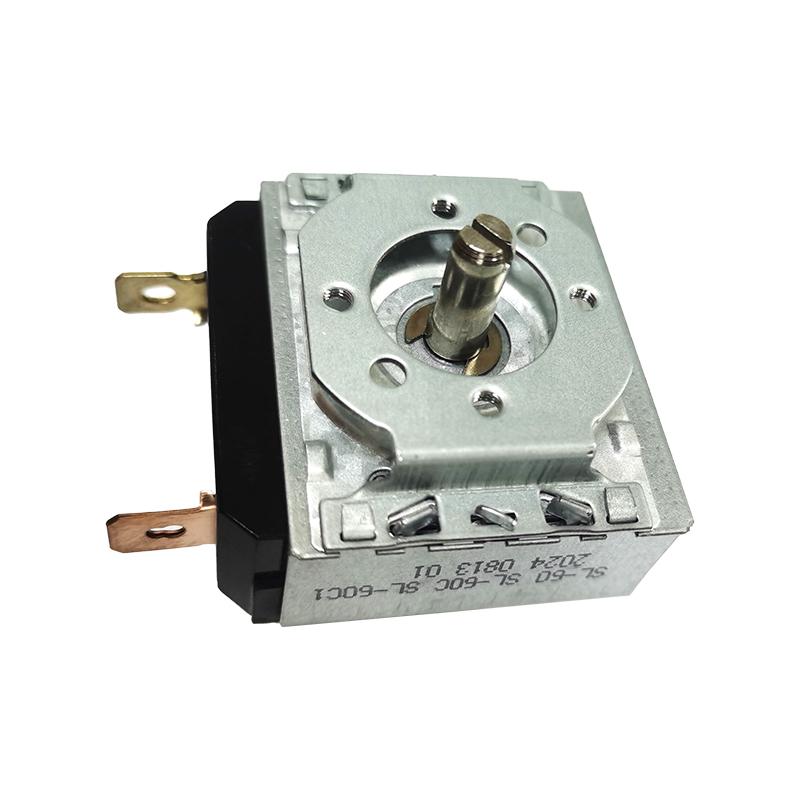
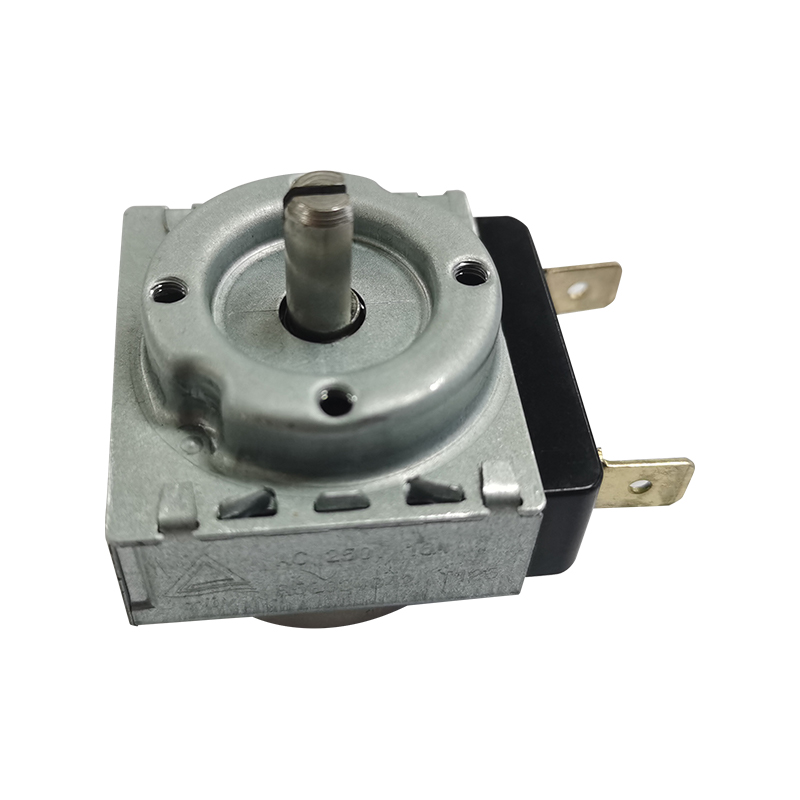
Shaft diameter, flat orientation, length, and thread determine whether the timer drops into an existing panel tool. Terminal type and spacing determine the harness. Changing either after tooling release is expensive, so request a mechanical drawing with tolerances at the sample stage and confirm it against the panel drawing from the industrial design team.
Bell, torque, and tactile feel
Bell or no bell is an acoustic decision, but it also changes the internal layout and the end-of-range load on the gear train. Turning torque and detent feel affect perceived quality even when timing is identical, so it is worth specifying a target torque window and validating it with a torque gauge on production samples rather than by hand.
Contact rating and load type
Ask what load the contact set was validated against, and whether that was resistive or inductive. Heating elements are broadly resistive, but fan motors and pump motors are not, and the difference shows up as contact erosion after a few thousand cycles.
Put range, repeatability band, temperature class, shaft drawing, and load type into the RFQ document; leaving any of them to a later conversation is how sample approval turns into a change request.
Matching Outlet Timer Variants to Appliances
Once the parameters are fixed, the remaining work is matching them to a catalogue variant that already exists. Working from existing variants shortens tooling time, keeps certification evidence reusable, and gives the buyer a realistic view of what can ship this quarter.
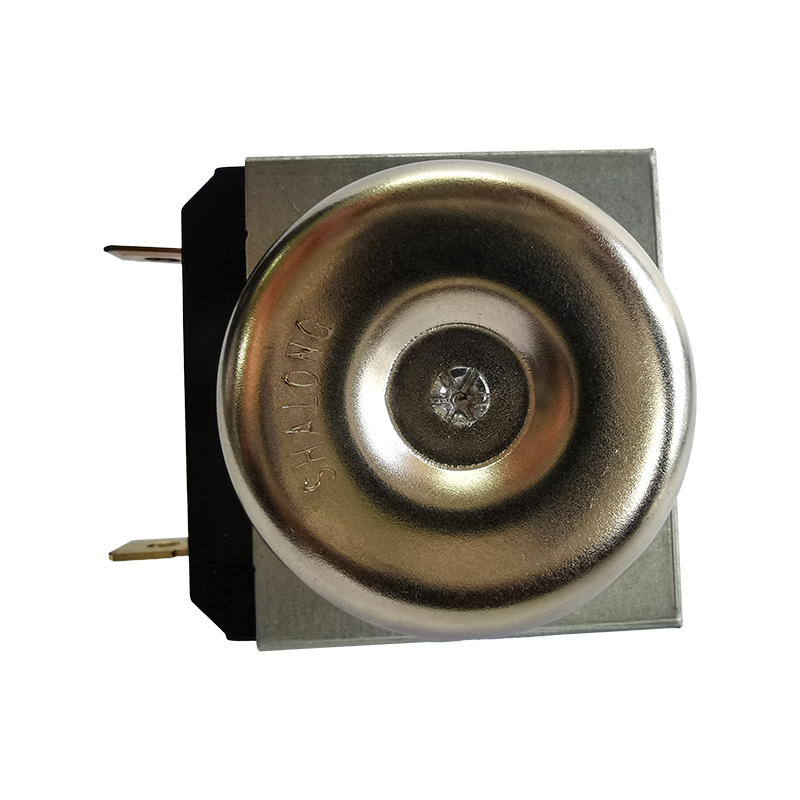 Countdown metal mechanical timer 30min 60min 90min DKJ SLTime setting: 15', 20', 30', 60', 100',120', 180' or customized (1-180min timer range) Applicable: Microwave/Oven/Electric Pressure Cooker/Kitchen Machine Contact capa...View Product →
The countdown family is the most transferable platform in the range, because a thirty, sixty, or ninety minute version covers a large share of countertop cooking cycles. Buyers who need a general-purpose unit for several appliance models frequently start here and then narrow to a dedicated variant.
Table 2. Timing ranges, bell options, and certification marks shown across the supplier's mechanical timer catalogue.
| Application |
Catalogue range |
Bell option |
Marks noted |
| Air fryer, regular series |
30-60 min |
With bell |
UL, DKJ |
| Air fryer, precision series |
30-60 min |
Without bell |
UL, CE |
| Egg cooker and egg steamer |
15 min |
Without bell |
- |
| Free-standing oven, round timer |
60 min |
- |
- |
| Oven, regular series |
60 / 90 min |
Without bell |
CE, TUV |
| Oven, precision series |
60 / 90 min |
With bell |
CE, TUV, DKJ |
| High-temperature ring timer |
160 min |
Long ring |
- |
| Deep fryer |
60 min |
High-temperature build |
- |
| Electric pressure cooker |
100 / 120 min |
- |
- |
| Electric steamer |
180 min |
With bell |
- |
| Disinfection cabinet |
30 / 60 min |
- |
DKJ, SL |
| Sterilizer |
20-30 min |
- |
- |
| Medical device |
5-15 min |
- |
CE, UL |
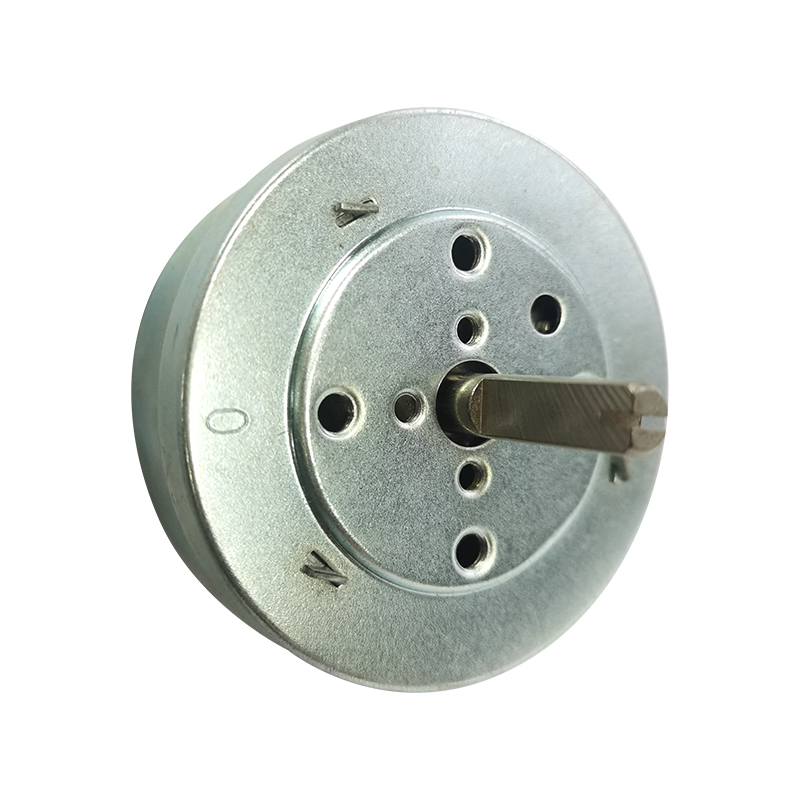 60min round oven mechanical timer for free standing ovensAir fryer metal mechanical timers SL 30 60min with bell UL DKJView Product →
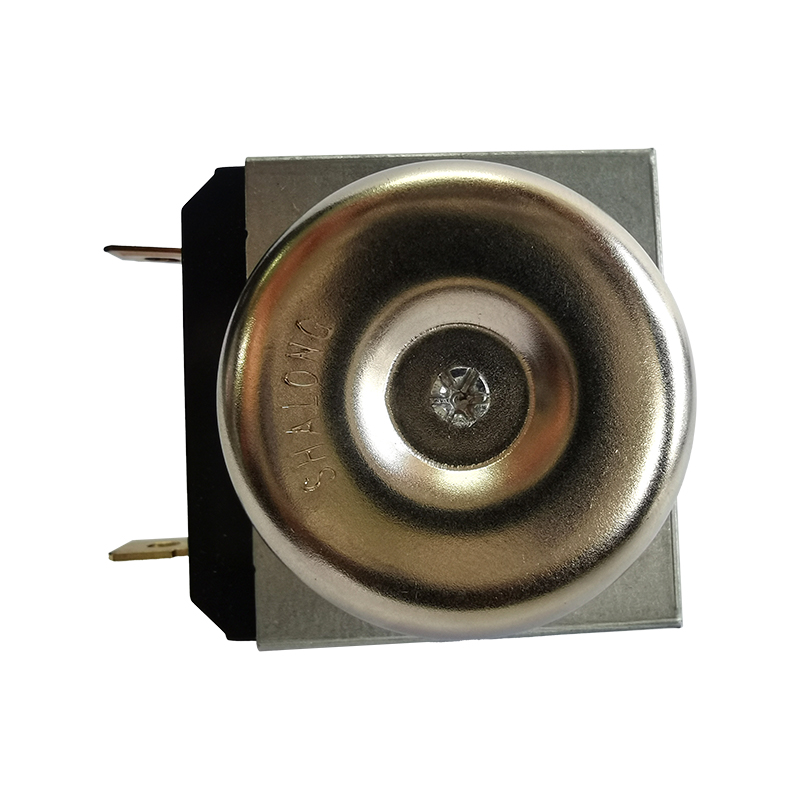
The round oven timer is a good example of matching form to function rather than chasing a single universal part. Its circular body suits the door or fascia geometry of a free-standing oven, where a rectangular movement would need additional bracketry. For air fryers, the split between a belled regular-series unit and an unbelled precision-series unit usually comes down to acoustics and available panel depth.
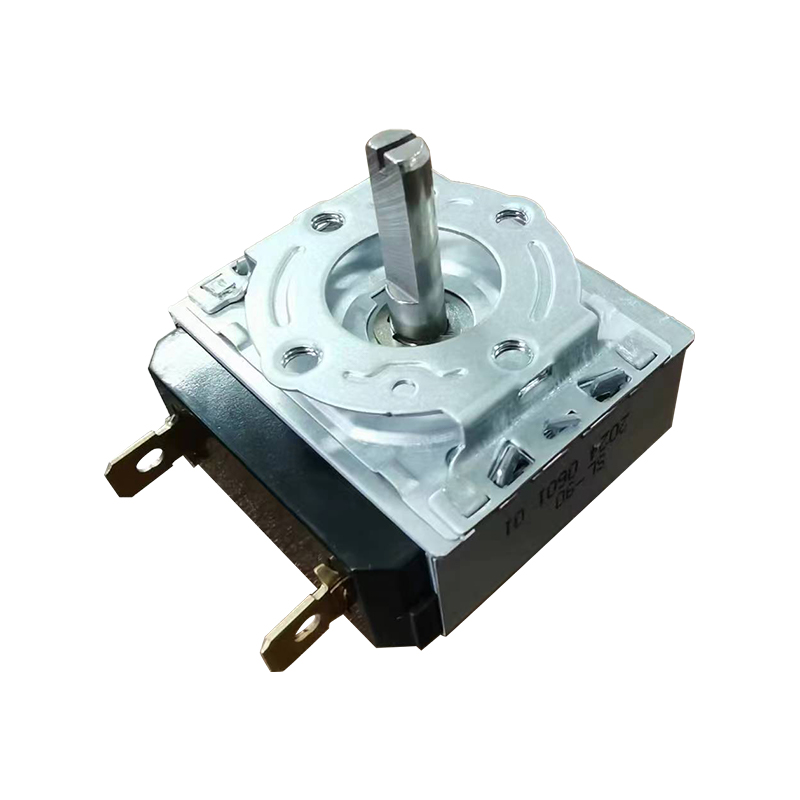 Air fryer metal mechanical timers SL 30 60min with bell UL DKJTime setting: 15', 20', 30', 60', 100',120', 180' or customized (1-180min timer range) Applicable: Microwave/Oven/Electric Pressure Cooker/Kitchen Machine Contact capa...View Product →
Air fryers deserve a note because their cycle is short and their cavity is small, so heat reaches the timer quickly during the first two minutes of operation. A 30-60 minute range with a bell and UL, DKJ marks covers the majority of retail programmes in North America and parts of Asia, while the precision-series equivalent without a bell suits designs where the end signal is produced by the main control board.
Starting from an existing catalogue variant shortens tooling and reuses certification evidence, which is usually worth more to a launch schedule than a fully custom movement.
Certifications That Decide Where an Outlet Timer Can Be Sold
Certification is a market-access question, not a quality badge, and it should be resolved before the appliance programme reaches tooling release. A timer with the right timing curve and the wrong mark cannot ship into the target market at all.
UL and the North American path
UL recognition or listing is the usual entry requirement for appliance components sold in the United States and Canada. For a mechanical timer, the assessment focuses on materials, temperature rise, contact construction, and mechanical endurance, since there is no firmware layer to review.
CE and the European path
CE marking for a component timer is normally demonstrated through the relevant safety and, where applicable, electromagnetic requirements. Mechanical timers carry a lighter EMC burden than electronic ones, which is one reason they remain attractive for cost-sensitive European ranges.
TUV and DKJ marks
TUV marks appear alongside CE on several of the precision-series timers in this catalogue, and DKJ marks appear on oven, air fryer, and disinfection cabinet variants. Buyers should confirm which mark the target retail channel actually accepts rather than assuming that additional marks are interchangeable, because the underlying test programmes are not identical.
Markets that shape the requirement
Export destinations influence the compliance plan as much as the product design does. Programmes shipping to South Korea, Turkey, Brazil, Saudi Arabia, and Egypt each bring their own registration expectations, and a supplier already exporting into those markets usually has documentation templates and test history that shorten the process considerably.
Settle certification before tooling: a timer that meets the timing specification but not the market's mark is a schedule risk, not a technical one.
Supplier Verification: How to Audit an Outlet Timer Manufacturer
Component buyers rarely get a second chance at supplier selection, so the audit questions should focus on capabilities that cannot be bought quickly. For mechanical timers, those are gear manufacturing, tooling ownership, and in-house test equipment.
Gear and tooling capability
Ask whether small-module hobbing machines, automated machining centres, and high-speed progressive stamping dies are developed in house. A manufacturer that produces its own tooling controls tooth geometry, lead time on design changes, and the consistency of the parts that decide timing accuracy. A manufacturer that outsources them controls none of those things directly.
Scale indicators that matter
Floor area, headcount, and engineering staff are proxies rather than guarantees, but they set an upper bound on what a supplier can absorb. For reference, a plant of more than 40,000 square metres with over 800 employees, including more than 80 engineers, can support multiple simultaneous programmes and still run dedicated sample lines. A supplier with more than 1,000 pieces of research, production, and inspection equipment can usually show traceability from incoming material to finished goods.
Process control and inspection
Review the inspection plan for the specific failure modes that matter: tooth profile on the gear train, contact gap and force on the switch, shaft runout, and end-of-range reset. Ask how torque and timing are sampled during production, not only at first article, and whether the equipment used for those checks is calibrated on a schedule that the buyer can see.
Standards participation and history
A manufacturer that has taken part in drafting industry standards has usually internalised the test methods rather than copied them from a customer drawing. Longevity matters for the same reason: a company operating since 1991 with long-running supply relationships with large appliance brands has already survived multiple cost-reduction cycles, which is a different kind of evidence from a capacity figure.
Audit the gear and tooling capability, not the showroom: timing accuracy is decided by tooth geometry and spring control, and those are the hardest capabilities to acquire quickly.
Failure Modes, Field Returns and Maintenance Guidance
Most mechanical timer returns fall into a small number of categories, and each one points back to a decision made during specification or assembly rather than to an inherent weakness of mechanical timing.
- Jam or seizure at part of the range: usually a gear train or cam interference issue, occasionally caused by foreign material entering during assembly.
- Timer runs fast or slow at the extremes: spring torque characteristics or escapement geometry, often first visible on samples that were approved using a single measurement point.
- Dial reaches zero but the load stays on: contact opening point set incorrectly relative to the cam profile, or a contact set that has welded under an inductive load.
- Bell fails to ring or rings weakly: hammer clearance, gong positioning, or shaft speed reduction caused by drag elsewhere in the train.
- Knob slips on the shaft: flat orientation or interference fits outside tolerance, sometimes aggravated by forced counter-clockwise turning by the end user.
Maintenance and end-user guidance
Mechanical timers need almost no maintenance, but they do need correct handling. Advise end users to turn the dial only in the winding direction and to return it to zero by allowing the mechanism to run down rather than forcing it backwards. In service documentation, state that the timer is a non-serviceable assembly and should be replaced as a unit, which prevents technicians from opening the movement and altering the escapement setting.
Design changes that reduce returns
Two design decisions consistently reduce field returns. The first is specifying a slightly wider tolerance band at the extremes of a long range rather than a single tight band across the whole dial. The second is choosing high-temperature resistant variants wherever the movement sits within 100 millimetres of a heating element, even if the nominal ambient appears acceptable on paper.
Most returns trace back to specification choices at the extremes of the range and to heat exposure, not to whether the timer was mechanical or electronic.
Ordering an Outlet Timer: RFQ, Samples, Lead Time and Wholesale Terms
An RFQ that arrives with all five of the following items attached usually moves from enquiry to sample in a fraction of the time it takes to resolve a partial one.
- A panel drawing showing shaft length, flat orientation, thread, and the space available behind the fascia.
- The required range, repeatability band, and reset behaviour, including the number of cycles used for verification.
- The ambient temperature the movement will see in operation, measured rather than estimated.
- The target markets and the certification marks each one requires.
- Annual volume by variant, with the split between models rather than a single blended figure.
Samples, tooling, and lead time
Where the requirement matches a catalogue variant, samples are typically drawn from existing tooling and the commercial discussion moves quickly. Where a new knob, shaft, or range is needed, tooling and first-article approval set the pace, and the buyer should ask explicitly which parts of the change require new tooling and which do not.
Working with a manufacturer rather than a trader
For programmes above a few hundred thousand units a year, direct engagement with the manufacturer is usually worth the additional coordination, because design questions reach the people who own the drawings. Traders and wholesalers remain useful for smaller, multi-model assortments, particularly for plug-in outlet timer ranges sold through retail channels, where a distributor can consolidate several variants into a single shipment.
Commercial terms to fix early
Agree on the inspection standard, the sampling plan, the packaging specification including knob protection, and the process for handling a change in contact material or spring supplier. Material substitution during a long programme is one of the more common causes of a sudden shift in field performance, and a notification requirement in the supply agreement closes that door cheaply.
Attach a panel drawing, a measured temperature, and a variant-level volume forecast to the RFQ, and add a material-change notification clause before the first production order.
FAQ: Outlet Timer Questions from Procurement and Engineering Teams
What is an outlet timer used for in appliance manufacturing?
It provides a fixed, user-set operating interval and then switches the load off or signals completion. Typical uses include oven baking cycles, air fryer cooking times, steamer sessions, pressure cooker timing, and disinfection or sterilization cycles where a defined interval matters for process control.
Is a mechanical outlet timer less accurate than an electronic one?
It offers lower resolution, not lower usefulness. A mechanical movement repeats within a defined band across its range, which is sufficient for cooking processes, while an electronic timer resolves to the second. Where the process requires multi-stage programmes or delayed start, electronic control is the practical choice.
Can an outlet timer work close to a hot cooking cavity?
Yes, provided the variant is specified for it. High-temperature resistant builds use materials and lubricants chosen for the ambient they will actually see, and manufacturers publish dedicated long-range and high-temperature models for ovens, deep fryers, and steamers. The mistake to avoid is fitting a standard unit into a high-heat position to save cost.
Do I need UL, CE, TUV, or DKJ for an outlet timer?
It depends entirely on the destination market and the retail channel. North American programmes normally require UL, European programmes require CE with TUV marks appearing frequently alongside it, and several Asian markets accept DKJ. Confirm the mark with the importer before ordering samples, because the required test programme affects both cost and schedule.
What causes an outlet timer to fail early in the field?
Contact welding under inductive loads, dust ingress during assembly, forced reverse rotation by the user, and heat exposure beyond the specified class account for the majority of early failures. Each is addressable through specification and handling instructions rather than through a design change.
How many cycles should a mechanical outlet timer be expected to complete?
That figure should come from the supplier's validation data for the specific variant and the specific load, agreed with the buyer at the sample stage. Treat any catalogue number offered without a stated test condition, load type, and cycle definition as a marketing figure rather than an engineering one.
How do I find a reliable outlet timer manufacturer or supplier?
Look for in-house gear and tooling capability, documented inspection of timing and torque during production, experience with the certification marks your markets require, and a customer base in the appliance industry rather than only in general trade. Visiting the plant and watching the timing check being performed is more informative than reading a capability brochure.
Can one outlet timer platform serve both an air fryer and a countertop oven?
Sometimes, if the range and temperature class overlap and the panel interface can be adapted with a knob and shaft change. In practice, most programmes use two variants, because the short, closely monitored air fryer cycle and the longer unattended oven cycle place different demands on the dial face and on the reset behaviour.
The four decisions that prevent most outlet timer problems are range, temperature class, load type, and certification mark, and all four can be settled before a single sample is produced.
Next Step: Matching an Outlet Timer to Your Programme
An outlet timer is a small component with a disproportionate influence on how an appliance feels to use and how often it comes back. The specification work takes a few hours; the field returns it prevents take months to resolve. Starting from a catalogue variant and layering certification and mechanical adaptation on top is the fastest credible route for most programmes.
For buyers who want to move from specification to samples, the practical next step is to send the panel drawing, range, temperature measurement, load type, target markets, and variant-level volumes together in one enquiry, so that the engineering response addresses the whole requirement rather than one parameter at a time.
Site resources
Technical enquiries, drawing packs, and sample requests can be submitted through the contact page, where the engineering team reviews range, certification, and mechanical interface questions together before quoting.
Send the full requirement set in the first enquiry: a complete drawing pack and a measured temperature shorten the path from specification to approved sample more than any single commercial term.



 English
 中文简体
中文简体