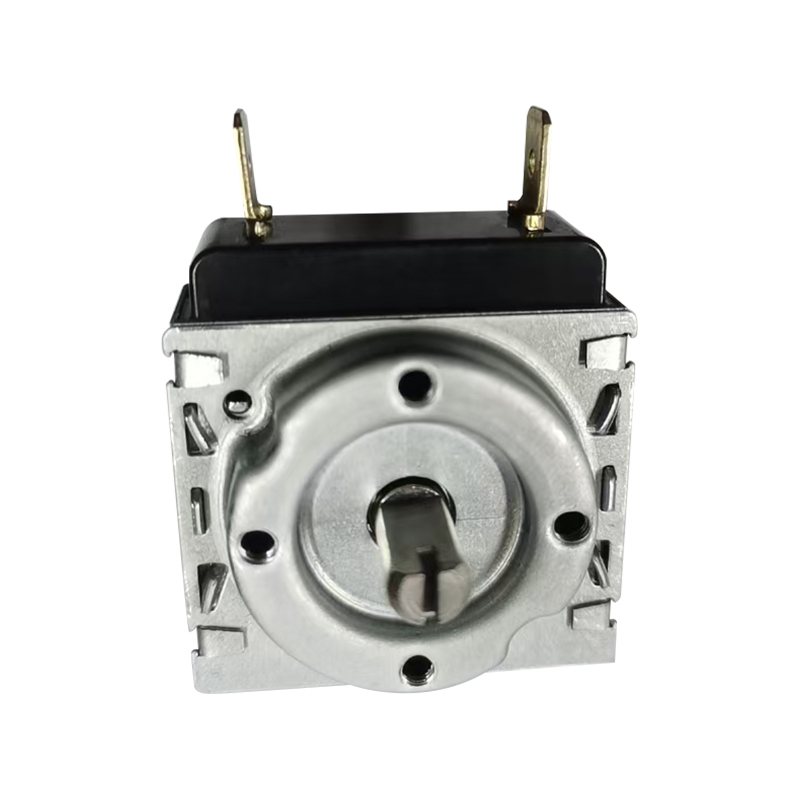
A customer writes in with a complaint that has nothing to do with cooking results. The eggs came out exactly as intended, but nobody in the kitchen heard the timer go off. The alarm was drowned out by a range hood, a kettle and a conversation happening one room away. That email is usually the moment a loud egg timer stops being a nice-to-have detail and becomes a specification line on the drawing.
The short answer up front: loudness in a mechanical egg timer is not luck, and it is not something you can judge from a single sample on your desk. It is decided by four things you can actually write into a purchase order, namely the mass and shape of the bell, the energy and travel of the hammer, the duration of the ring, and the rigidity of the housing the module is mounted into. Fix those four and a 15 minute dial becomes a genuinely audible product. Get them wrong and you can hold a perfectly accurate timer that nobody notices.
This guide is written for the people on the other side of that decision: product managers defining a new egg cooker or steamer, engineers deciding whether a mechanical module fits the housing, quality teams writing an incoming inspection routine, and buyers comparing one manufacturer against another. It covers what loudness means in measurable terms, how a mechanical bell differs from a buzzer, how to match ring length to a fast cooking cycle, what tolerance is realistic, and what to put in an RFQ so that the sample you approve is the sample you receive in volume.
Loudness is a design parameter rather than a lucky sample: bell mass, hammer energy, ring duration and housing rigidity decide whether the alarm is heard at all.
What a loud egg timer actually has to do
An egg cooker is a small appliance with a short cycle and, in most designs, no display. The user fills the base, sets the dial, walks away, and expects to be called back within fifteen minutes. There is no screen to glance at, no notification on a phone, and often no second reminder. The alarm is the entire user interface for the end of the process, which means a missed ring is not a minor annoyance, it is a failed product experience that lands in the review section of an e-commerce listing.
The acoustic environment makes this harder than it sounds. Small kitchens are noisy places. A range hood on a high setting, a boiling pot, a dishwasher, a television in the next room and a closed door all sit between the appliance and the person who needs to hear it. High frequency content travels better through that kind of background than a low hum, which is one reason a struck metal bell cuts through where a soft electronic tone does not. A bell also has a natural decay, so the sound arrives as a short event rather than a continuous tone that the ear learns to ignore within two seconds.
There is also a behavioural point that matters for design reviews. A short, sharp, unmistakable ring gets attention. A long, polite chime gets tolerated and then forgotten. Products that users describe as reliable tend to have an alarm that is slightly more assertive than strictly necessary, because the cost of being too quiet is far higher than the cost of being slightly startling.
The three numbers worth asking for
When a supplier says a timer is loud, the useful follow-up is a request for three specific figures. The first is sound pressure level, measured at a stated distance such as one metre, in a stated condition such as free air with the module mounted in a representative panel. Without the distance and the mounting condition the number means very little, because a module held in the hand sounds different from one clamped into a steel bracket.
The second is ring duration, expressed in seconds, together with the number of strikes. A single strike and a four second continuous ring are very different user experiences even at identical peak levels. The third is timing accuracy across the dial, ideally at three points, because a bell that is loud but drifts is not a better product. Ask for all three on the same document so the trade-offs are visible.
A loudness claim without a stated distance, mounting condition and ring duration is not a specification, it is an opinion.
Bell, buzzer or beep: where the loudness comes from
Three alarm technologies dominate small kitchen appliances, and they behave differently in ways that matter more than raw decibel figures. A mechanical bell is struck by a hammer driven from the timing mechanism, so the sound is generated by a physical impact and shaped by the resonance of the bell itself. A piezo buzzer produces a continuous high tone from a vibrating ceramic disc. An electronic beep from a small speaker sits somewhere between the two and depends heavily on the enclosure it is placed in.
In practice, the mechanical bell has one advantage that is hard to replicate electronically at the same cost: it needs no power to make a noise beyond the energy already stored in the spring. The alarm works when the appliance is unplugged mid-cycle, when the electronics have failed, and when the product has been sitting in a warehouse for two years. For a B2B manufacturer supplying into a market where returns are expensive, that independence is worth a great deal.
General comparison of alarm types used in egg cookers and small kitchen appliances; the practical difference sits in sound character, failure behaviour and cost more than in a single decibel figure.
| Alarm type |
Sound character |
Where it helps |
Where it falls short |
| Mechanical bell, single strike |
Short metallic impact with fast decay |
Compact modules, low cost, works without power |
Can be missed if the user is in another room |
| Mechanical bell, long ring |
Repeated strikes over several seconds |
Noisy kitchens, larger appliances, elderly users |
Needs more energy from the spring and a stiffer housing |
| Piezo buzzer |
Continuous high tone |
Very small enclosures, electronic control boards |
Depends on power, tone can blend into background noise |
| Electronic beep via speaker |
Programmable tone or melody |
Feature-rich appliances with displays |
Cost, firmware dependency and weaker performance in humidity |
For an egg cooker with a fifteen minute cycle, the sweet spot is usually a small bell with a short repeated ring rather than a single loud strike. The repeated pattern survives background noise better because the ear has several chances to catch it, and it lets the design use a lighter hammer spring, which reduces wear on the escapement over thousands of cycles.
A repeated short ring is more reliably heard than one loud strike, and it costs less spring energy than a single heavy impact.
Ring length and dial range: matching the alarm to the egg programme
Dial range and ring length are usually discussed separately, but they are tied together through the spring. A wider dial means more turns of the mainspring and more stored energy, which is good news for the bell. A very short dial, such as the fifteen minute range common on egg cookers and egg steamers, stores less energy, so the bell design has to be efficient rather than merely large.
The chart below places the dial ranges typically specified for egg-related and nearby kitchen appliances on a common scale. It is a planning view rather than a product catalogue, and it exists to show why a module lifted from a 180 minute steamer will not simply drop into a 15 minute egg boiler without rework.
Typical maximum dial setting by appliance type, in minutes
Egg cooker or egg boiler, dial max 15
Air fryer module, dial max 30 to 60
Built-in oven module, dial max 60 to 90
Electric pressure cooker, dial max 100 to 120
Electric steamer, dial max 180
The egg cooker sits at the far left of the scale, and that position explains most of the engineering pressure. With only fifteen minutes of travel available, the mainspring cannot store much energy, so the hammer has to be light and the bell has to be efficient at converting that small impact into sound. A supplier who simply scales down an oven module will usually end up with a bell that is technically present but practically inaudible.
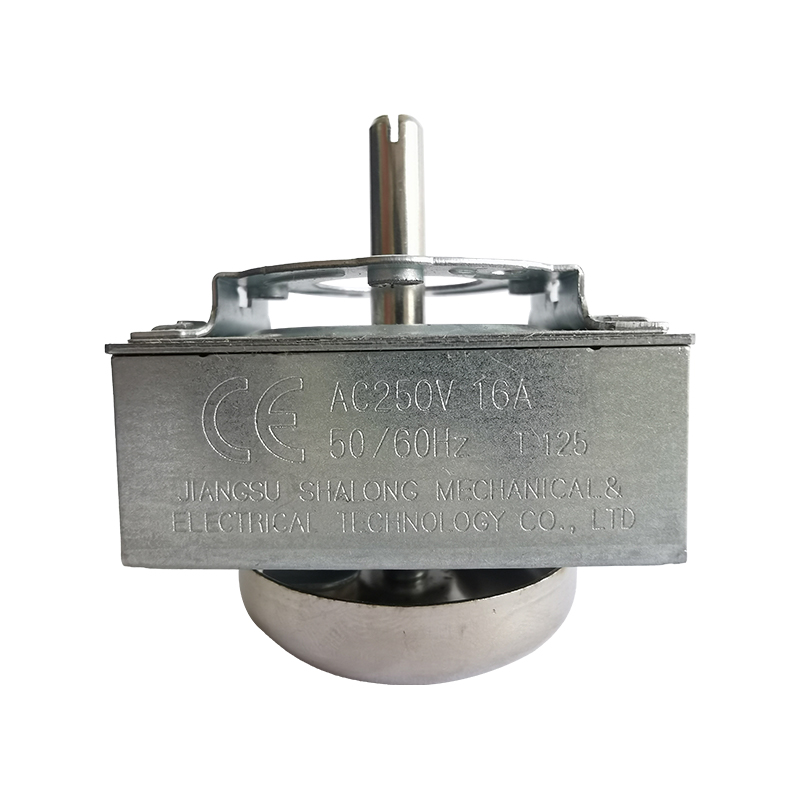
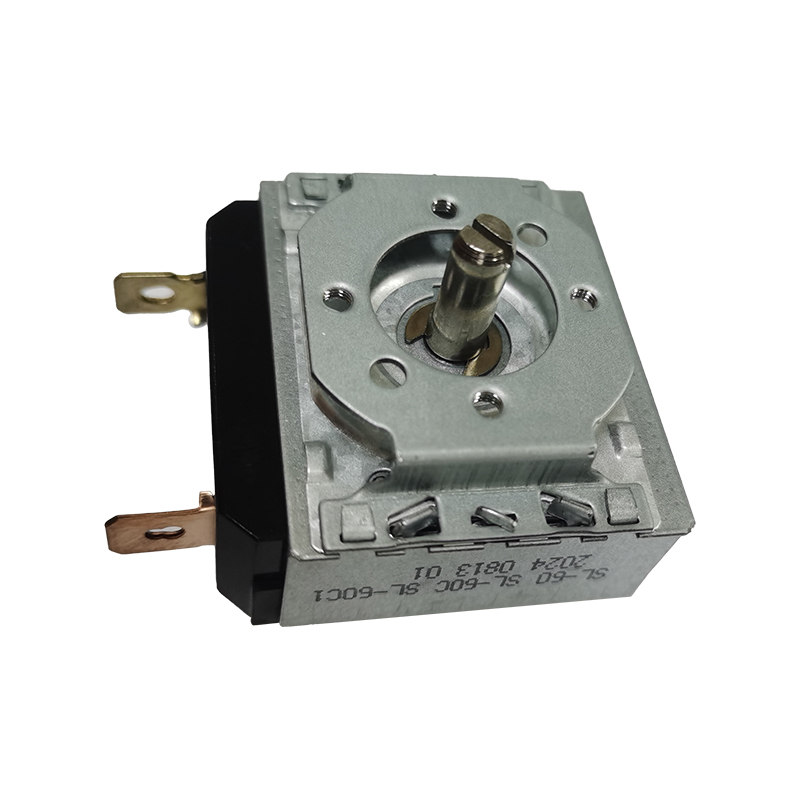
The chart also shows why short dial appliances deserve a dedicated platform rather than a derivative. Our SLS-X small size precision series was developed around exactly this constraint, with a 15 minute egg cooker module that keeps the mechanism compact while leaving room for a properly tensioned hammer spring. Buyers comparing quotations should look at whether the module was designed for the short range or adapted from a longer one, because the difference shows up in the ring.
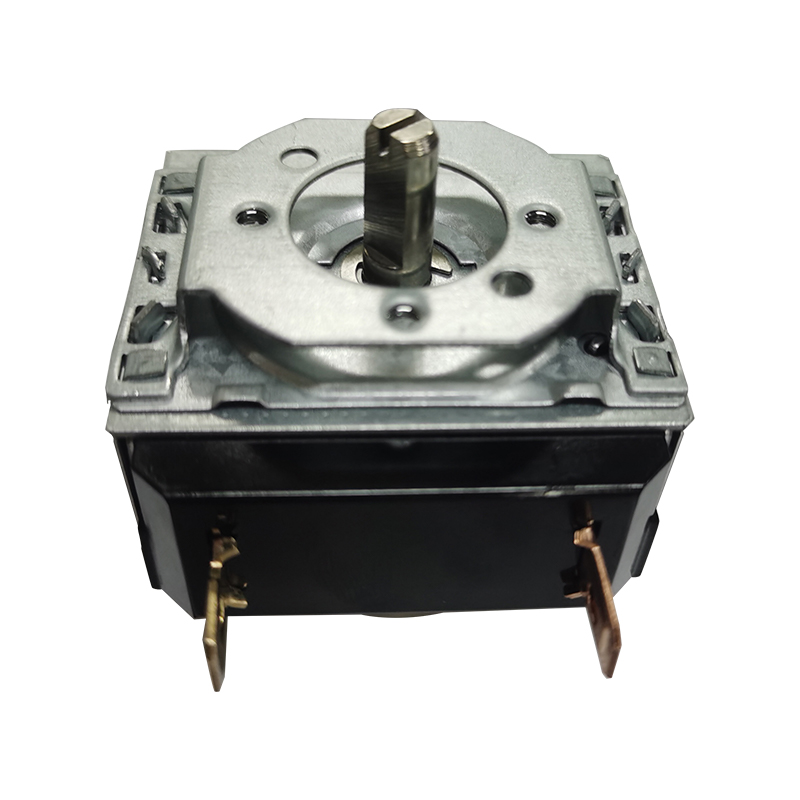
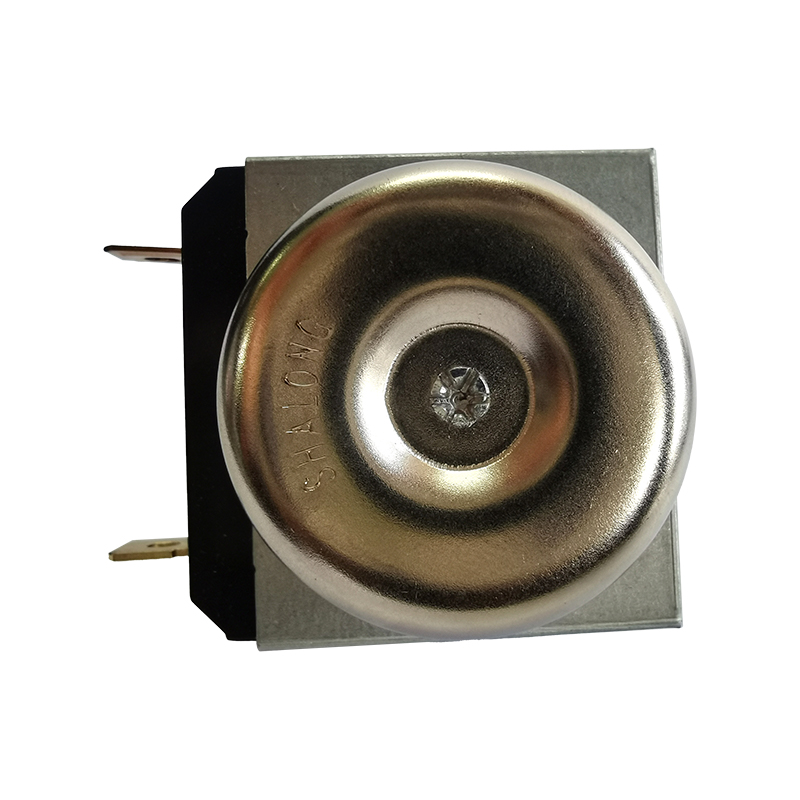
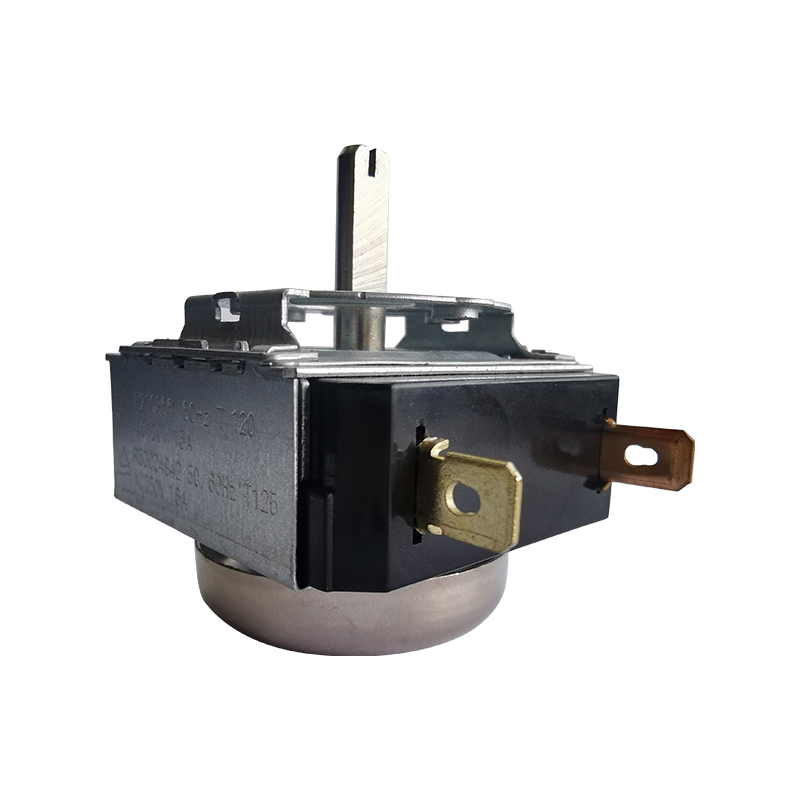
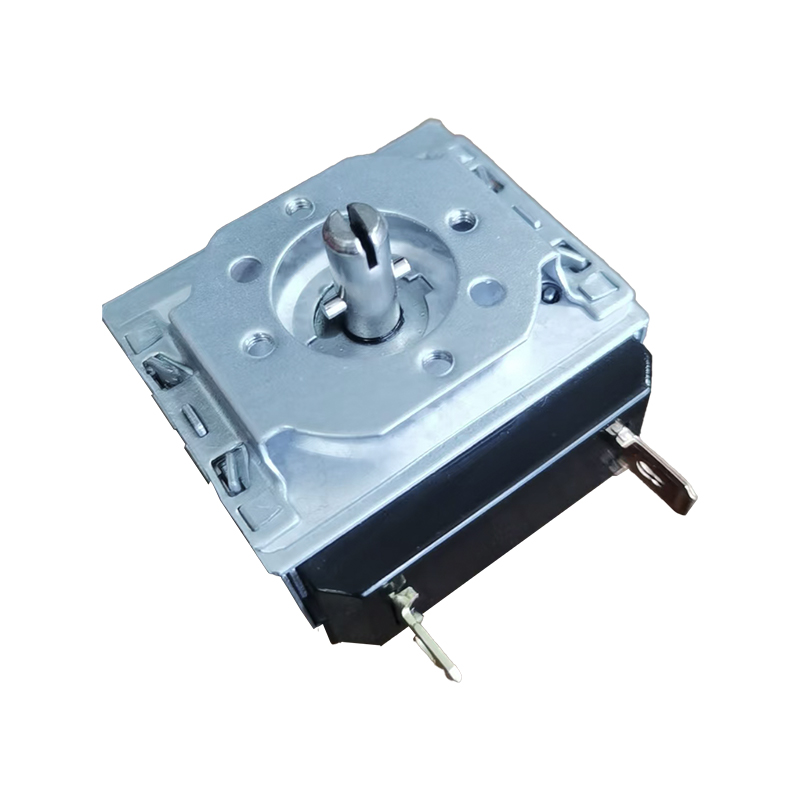
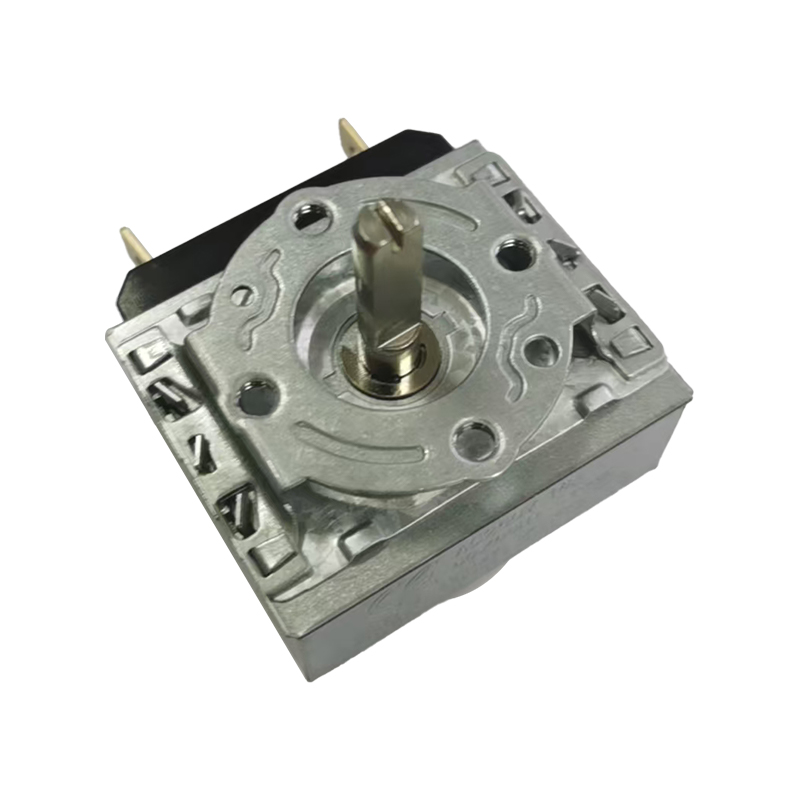
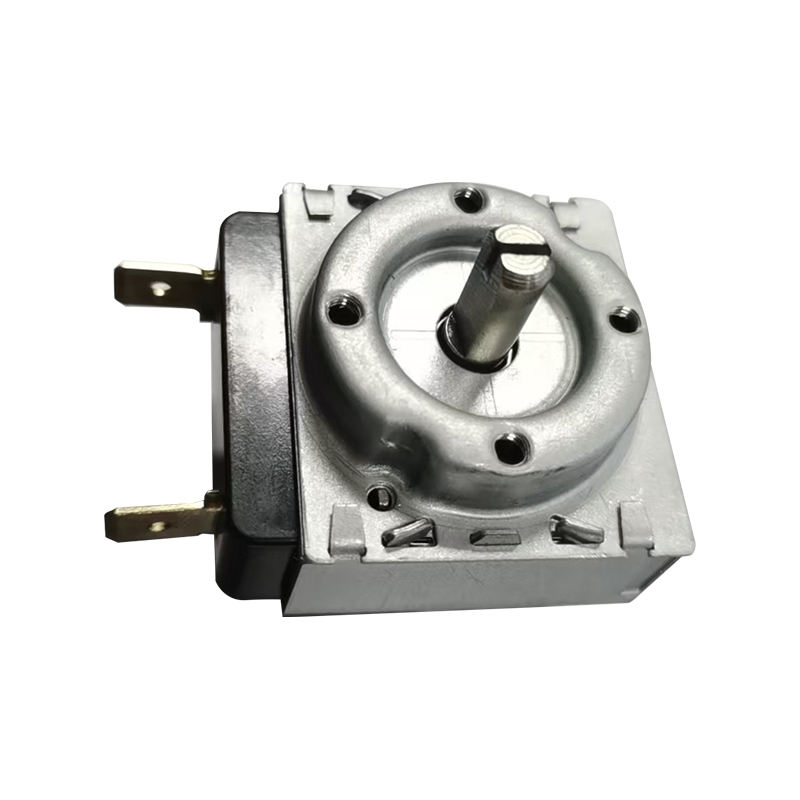
 SLS-X 15-Minute Egg Cooker Mechanical Timer Without BellCompact metal mechanical timer built for 15-minute egg cooker modules, without a bell and with a short-range design rather than a longer adapted platform.View Product →
A short dial range stores less spring energy, so an egg timer needs a purpose-built module rather than a scaled-down oven timer.
How accurate does an egg timer need to be
Timing accuracy is where buyers sometimes over-specify and then pay for it. A mechanical timer in this class typically holds a tolerance in the region of a few percent of the full scale, which on a fifteen minute dial means the practical resolution is far finer than the cooking process itself. Egg doneness is not a precision event, it is a window, and the window is wider than the tolerance of a well-made module.
What matters more is repeatability. Two eggs set to the same position on the dial should come out the same way, cycle after cycle, and that consistency is a function of the gear train, the cam profile and the quality of the self-stepping mechanism rather than of absolute accuracy at full scale. A timer that runs slightly fast but always runs the same amount fast is easier for a user to live with than one that wanders.
Commonly used boiling windows for large eggs taken straight from the refrigerator; a 15 minute dial covers all of them, which is why alarm quality matters more than range in this appliance class.
| Result wanted |
Typical time window |
Dial position |
What the timer must deliver |
| Soft boiled, runny yolk |
About 4 to 6 minutes |
Lower third of the dial |
Consistent short-interval accuracy and a clear ring |
| Medium, jammy yolk |
About 7 to 9 minutes |
Middle of the dial |
Stable mid-range behaviour after many cycles |
| Hard boiled |
About 10 to 12 minutes |
Upper third of the dial |
No drift near the end of the spring travel |
| Multiple eggs or cold water start |
Add 1 to 2 minutes |
Near the dial maximum |
Reliable ring even at full wind |
There is a second-order effect worth flagging in design reviews. On a short dial, a small mechanical error translates into a large angular error at the pointer, which makes the dial feel imprecise even when the timing is fine. Graduation design, pointer width and detent feel do a lot of work here. Buyers who test samples by eye often reject a good module for a cosmetic reason, so it helps to agree in advance which dial positions will be checked and how.
Repeatability matters more than absolute accuracy on a short egg dial, because the cooking window is wider than the tolerance.
Steam, heat and grease: what a loud bell has to survive
An egg cooker is a steam generator with an electrical base. The timer sits close to boiling water, inside a housing that cycles between ambient and high humidity several times a day. That environment is unkind to anything that relies on clean metal contacts, and it is particularly unkind to a bell, because the bell needs a free air path to be heard and a free air path is also a path for moisture.
The usual failure is not a broken mechanism, it is a dull one. Condensation and cooking residue settle on the bell surface and on the hammer face, changing the contact and softening the strike. Over a few hundred cycles the ring goes from sharp to muffled, and the user reports that the timer has become quiet rather than that it has broken. This is why high temperature resistant construction matters even in an appliance that never exceeds the boiling point of water.
Practical countermeasures are straightforward but need to be designed in rather than added later. A bell material that resists surface oxidation keeps its tone. A hammer face that does not deform under repeated impact keeps its energy transfer. A housing with a controlled vent path lets sound out while limiting direct steam contact. And a mounting interface that does not rely on soft plastic under load avoids the slow creep that eventually lets the module sit loose in its pocket.
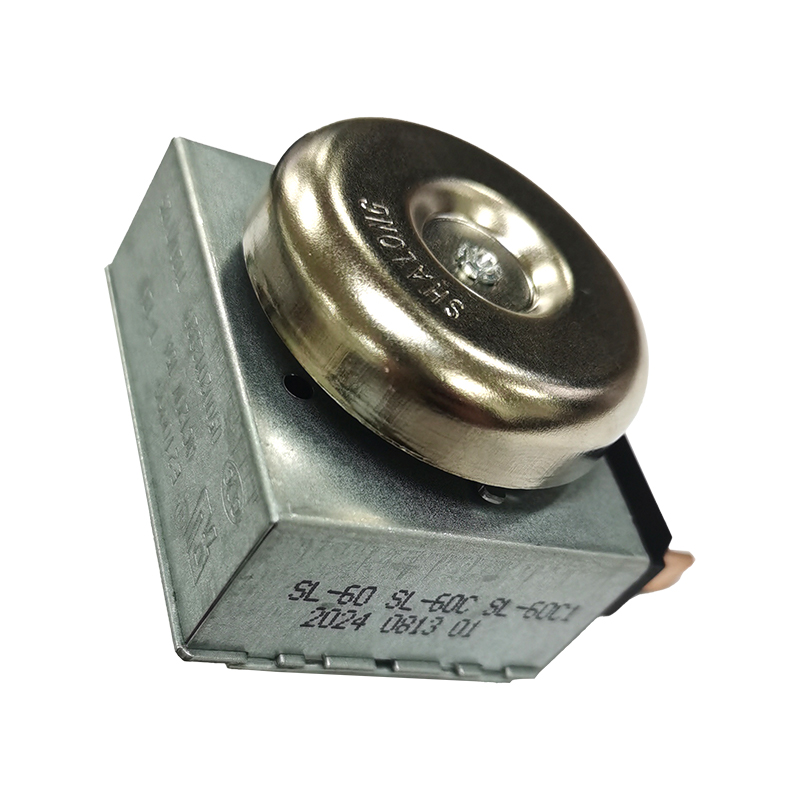
This is the reasoning behind our 160 minute high temperature resistant metal mechanical timer with the long ring configuration, which was built for appliances where the module sits in a warm, humid cavity and still has to announce itself clearly. The long ring arrangement gives the user several chances to hear the alarm in a noisy kitchen, and the metal construction tolerates the thermal cycling that a plastic bell would not.
 High-Temperature-Resistant Metal Oven Timer with Long RingHigh-temperature-resistant metal circular timer for oven use, with a 1–60 minute range and a long ring for clear signaling.View Product →
In a steam environment the risk is a bell that slowly goes dull rather than one that fails outright, so material and vent design decide long-term loudness.
Making the alarm louder without breaking the timing
Once a module is in production, there is usually pressure to make it louder without changing the mechanism, the tooling or the price. Some of that is achievable, and some of it quietly damages the timing. It helps to know which lever does what.
Bell geometry and hammer gap
The gap between the hammer and the bell is the single most sensitive adjustment. Too small and the hammer rests against the bell, damping the sound and wearing the contact. Too large and the hammer loses energy before it arrives. A gap that is set correctly at assembly can still drift if the mounting plate flexes, so the plate stiffness belongs in the same conversation as the bell size.
Spring tension versus escapement load
Increasing hammer spring tension raises the strike energy, but it also adds load to the train. On a fifteen minute module with a light mainspring the margin is thin, and an over-tensioned hammer spring shows up as shortened running time or a mechanism that stalls near the end of the dial. The right answer is usually a better bell rather than a stronger spring.
Housing resonance and mounting
Many "quiet timer" complaints are actually housing complaints. A module mounted on a thin panel with a soft gasket can lose several decibels compared with the same module on a rigid bracket. Buyers who test a bare module on a bench and then approve it for a moulded pocket sometimes discover the difference only in pre-production. Testing in a representative housing is worth the extra week.
The dial as an acoustic part
It sounds unlikely, but the dial and knob assembly can absorb energy if it is mechanically coupled to the bell plate. Isolating the pointer from the bell circuit, or adding a compliant element between them, is a cheap way to recover loudness without touching the timing train at all.
Most loudness gains come from bell geometry and housing rigidity, while simply tightening the hammer spring tends to trade ring volume for timing reliability.
Certification and market access for a loud egg timer
A bell inside a small appliance is a safety-relevant component in the eyes of most regulators, because it sits on the mains side of the product and its failure mode can involve a stalled motor or a jammed contact. Buyers exporting to North America generally look for UL recognition, buyers shipping into the European Union work around CE marking supported by the relevant test reports, and TUV reports are commonly requested where a retailer wants an independent assessment. Domestic Chinese appliance makers frequently reference DKJ documentation alongside the certification file.
From a purchasing point of view, certification is a screening criterion rather than a differentiator. What matters is whether the certificate covers the exact model and rating you intend to buy, whether the file is current, and whether the manufacturer can supply the paperwork as a routine part of the shipment. A certificate for a similar model in the same family is not the same thing, and this is a common place where a purchase order slows down at the last minute.
Because our own product range is supplied into programmes with different market destinations, the same mechanical platform is offered in variants that carry different certification combinations. The SL-X series air fryer timer with bell, for example, is supplied with UL and DKJ documentation, and it illustrates how a bell-equipped module can be configured for a specific market rather than sold as a one-size export item.
 SL-X Air Fryer Mechanical Timer with Bell, UL and DKJMetal mechanical timer for air fryers with bell and UL/DKJ documentation, offered in 15–180 minute settings for market-specific appliance programmes.View Product →
For buyers, the practical step is to state the destination markets in the first email rather than the third. A supplier that knows the target market at the quotation stage can propose the correct variant immediately, which usually saves a full sample round.
Certification must cover the exact model and rating on the purchase order, so state your destination markets before the quotation, not after the sample.
What a manufacturer, supplier or wholesaler should put in the RFQ
Mechanical timer quotations vary enormously in quality, and the variation usually reflects the enquiry rather than the supplier. A one-line request for a price per thousand tends to come back with a one-line answer. A structured request comes back with something a purchasing team can actually evaluate, compare and defend in an internal review.
The list below is the working checklist we use when a new programme starts, and it applies equally to an appliance brand building its first egg cooker and to a wholesaler adding a mechanical timer line to a catalogue.
- Application and appliance type, including whether the module sits near steam, oil or dry heat.
- Dial range required, with the working portion of the dial identified, for example 3 to 12 minutes on a 15 minute dial.
- Alarm requirement stated as a behaviour, such as a repeated ring lasting several seconds, rather than the word loud.
- Target sound pressure with the measurement distance and the mounting condition specified.
- Acceptable timing tolerance at low, mid and full scale, and the test method for checking it.
- Panel thickness, shaft length, shaft shape and the fixing method available on the moulding.
- Terminal orientation, wire routing and any connector preference.
- Destination markets and the certification documents required for each.
- Expected annual volume, first order quantity and the seasonal pattern behind the forecast.
- Dial artwork, units, language and whether the printing is supplied by the buyer or produced by the manufacturer.
- Endurance target in cycles, and the acceptance criteria after that endurance run.
- Packaging, labelling and any requirement for traceability by batch.
Two items on that list do most of the work in practice. The alarm behaviour statement removes the ambiguity that leads to a rejected first sample, and the endurance target separates suppliers who test from suppliers who assume. Everything else is detail that a competent manufacturer can handle once those two are clear.
Describe the alarm as a behaviour and the endurance as a number, and most of the ambiguity in a mechanical timer quotation disappears.
Customisation options that change the sound
Customisation in this product category rarely means a completely new mechanism. It means a set of choices around a proven platform, and some of those choices have acoustic consequences that are easy to overlook during a cost review.
Dial artwork and units
Printing minutes, egg symbols, a soft-to-hard scale or a brand colour on the dial has no direct effect on sound, but the dial material does. A thicker dial with a stiff hub transmits less vibration into the knob and keeps more energy in the bell. When a buyer asks for a premium dial, this is one of the small advantages that comes with it.
Shaft length and panel interface
A longer shaft adds a lever arm, and if the panel is thin the whole assembly can flex on each strike. The result is a duller ring and a dial that feels loose. Specifying a shoulder or a boss on the panel, rather than relying on the shaft alone, is usually the cheapest fix.
Bell cover and vent path
Some housings need a cover over the bell for ingress protection. The cover design decides whether the sound exits freely or resonates inside a small cavity. A slotted cover with an open path performs very differently from a closed cap, and the difference is measurable. This is the first place to look when a production unit is quieter than the approved sample.
Manual operation and detent feel
Manual set modules live or die by the feel of the detent and the resistance of the spring. Too light and the user overshoots the intended time, too heavy and the knob is hard to turn with wet hands. Since egg cookers are often operated with wet hands next to a sink, this is a genuine usability question rather than a cosmetic one.
Customisation choices such as shaft length, panel boss and bell cover design quietly decide whether the approved sample and the production unit sound the same.
Incoming inspection: a simple protocol for loud egg timers
A buyer does not need a laboratory to verify that a shipment behaves like the approved sample. A short, repeatable routine run on every batch catches almost everything that matters, and it takes less time than resolving a single field complaint.
- Draw a sample across the batch rather than from the top of one carton.
- Mount each unit in a representative panel or bracket, not loose on the bench.
- Measure the ring at a fixed distance with a sound level meter, and record the figure.
- Time the ring duration and count the strikes, comparing both against the approved limit sample.
- Run a timing check at roughly a quarter, half and full dial, using the same stopwatch method each time.
- Cycle the unit through a defined number of full wind and release operations and listen for change.
- Inspect the bell face and hammer for residue, corrosion or deformation after the cycle run.
- Compare a retained golden sample by ear as a final check, since the ear catches tonal changes that a meter averages out.
The golden sample is the part of this routine that buyers most often skip and later regret. A number tells you the level; a comparison tells you the character. A unit that measures correctly but sounds flat usually has a mechanical problem that will get worse, and it is much easier to reject that unit at goods-in than to explain it to a customer three months later.
Meter the level, time the ring and compare against a retained golden sample, because a number alone will not reveal a bell that has gone tonally flat.
Failure modes that quieten a bell over time
Field returns in this category are rarely dramatic. The appliance still works, the eggs still cook, and the customer is vaguely dissatisfied. Understanding the common paths to a quiet timer helps a quality team decide what to screen for and helps a design team decide where to spend tooling money.
- Hammer gap drift caused by a flexing mounting plate, which either damps the strike or loses energy before contact.
- Surface oxidation or cooking residue on the bell and hammer faces, which softens the tone without stopping the ring.
- Hammer spring fatigue after many thousands of cycles, which reduces strike energy gradually and is easy to miss in short tests.
- Plastic creep at the fixing points, allowing the module to sit loose and rattle instead of ring.
- Escapement wear from an over-tensioned hammer spring, which shows as shortened running time rather than as a sound problem.
- Moisture ingress through an unprotected vent path, which is the most common cause of a bell that rings once and then sounds muffled.
None of these require exotic materials to prevent. They require the module to be designed for the appliance rather than selected from a catalogue by dimension, and they require the housing to be treated as part of the acoustic system. In our experience with high volume kitchen appliance programmes, the projects that avoid these problems are the ones where the timer supplier was involved before the housing was frozen, not after.
Almost every quiet timer in the field traces back to a housing decision or a spring compromise, not to a fundamentally faulty mechanism.
Cost, tooling and lead time: the commercial side
Commercial terms in this category are less mysterious than they first appear, but they reward preparation. The main variable cost drivers are the amount of brass or steel in the bell, the precision of the gear train, the number of operations in assembly and the level of testing performed on each unit. A module built for a fifteen minute egg cooker is cheaper than an oven module of the same diameter because it uses less material and fewer components, not because it is worse.
Tooling is the item that surprises new buyers. Dial artwork, printing plates and any bespoke shaft or mounting plate all carry a one-off cost, and that cost is normally amortised across the first order rather than charged separately. It is worth asking explicitly how tooling is handled, whether it is refundable at a volume threshold, and who owns the artwork files afterwards.
Lead time depends heavily on whether the model is a catalogue item or a customised variant. Standard models from an established manufacturer with its own machining capacity move quickly, while a new dial printing or a new shaft length adds a setup step. Buyers planning a launch should ask for the lead time of the first production run separately from the repeat order lead time, because the two are rarely the same.
Capacity is worth a question of its own. A supplier with in-house tooling and stamping can absorb a forecast change that a trading company cannot. Our own operation in Jingjiang, with more than 40,000 square metres of self-built plant and over 800 staff, was built around the assumption that mechanical timer programmes run for years and need to scale without re-sourcing the tooling. That structure is not unique, but it is the kind of detail a buyer should confirm rather than assume.
Ask separately about first-run lead time, repeat lead time and tooling ownership, because those three answers reveal more about a supplier than the unit price does.
Frequently asked questions about loud egg timers
How loud is a loud egg timer in practice?
In this product class, most mechanical bells land somewhere in a range that a person would describe as clearly audible from the next room with a door open, measured at one metre in free air. The exact figure depends on bell size, hammer energy and the housing. The useful conversation is not a single number but the combination of level, ring duration and tonal character, tested in the housing the module will actually live in.
Does an egg cooker really need a bell, or is a buzzer enough?
For a short cycle appliance used near a sink and a range hood, a bell has two practical advantages: it works without power and it produces a distinct impact sound that the ear does not blend into background noise. A buzzer can work well in a quiet kitchen, but it depends on the electronics and on a tone that many users find easier to ignore.
Can an existing timer be made louder without retooling?
Sometimes. Adjusting the hammer gap, adding a compliant element between the dial and the bell plate, or opening the vent path can recover a noticeable amount of volume. Beyond that, the bell itself and the mounting arrangement usually need to change, which is a tooling decision rather than a tuning one.
What timing tolerance should be written into the purchase order?
State the tolerance as a percentage of full scale at three dial positions, and state the test method and the stopwatch resolution. On a fifteen minute dial, a tolerance expressed in seconds at each of the three points is easier for both sides to check than a single percentage figure applied to the whole range.
Can the dial carry our brand and language?
Yes. Dial artwork, units, language and colour are routinely customised, and the dial material can be selected with acoustic behaviour in mind as well as appearance. Artwork files, proofing steps and the approval of a printed sample should be agreed before the tooling is released.
Which certifications are available for export models?
UL, CE, TUV and DKJ documentation appear across the range depending on the model and the destination market. Because coverage is model specific, the destination market and the exact model number should be stated at the enquiry stage so the correct variant and paperwork are quoted together.
What order quantity makes sense for a first run?
That depends on the model, the tooling involved and the forecast behind the launch. Rather than naming a single figure, it is more useful to share the annual forecast and the first order quantity, then ask what the manufacturer recommends for a stable start and what volume unlocks better tooling terms.
Most questions about a loud egg timer come back to the same principle: specify the behaviour, test it in the real housing, and confirm the paperwork covers the exact model.
Next step: listen to a sample in your own housing
Reading about loudness will only take a programme so far. The decisive test happens when a sample module is mounted in your housing, wound to the position your users actually use, and listened to from the distance your users actually stand. That single test resolves more arguments than a page of specifications, and it is worth doing before the moulding is frozen rather than after.
If you are working on an egg cooker, steamer or similar short-cycle appliance and the alarm needs to be heard in a busy kitchen, the practical next steps are straightforward. Send the dial range, the target ring behaviour, the panel interface and the destination markets, and ask for a sample in the closest existing configuration. If you want background reading first, the article on why mechanical timers hold their place in kitchen appliances against electronic alternatives covers the reliability argument in more depth.
Useful next reading and contact
Approve the alarm by ear in your own housing, then write that exact behaviour into the purchase order so the volume shipment matches the sample.



 English
 中文简体